
Let’s talk about a common gym frustration that rarely gets discussed in “Best Gear” lists. You’re mid-set on a heavy deadlift, your back has plenty left in the tank, but your straps start to slide. You tighten them, you reset, but they keep “gliding” around the bar like they’ve been oiled.
Most lifters instinctively blame their grip or think they haven’t wrapped the strap tight enough. But the real culprit is almost never the lifter—it’s the material science of the strap itself.
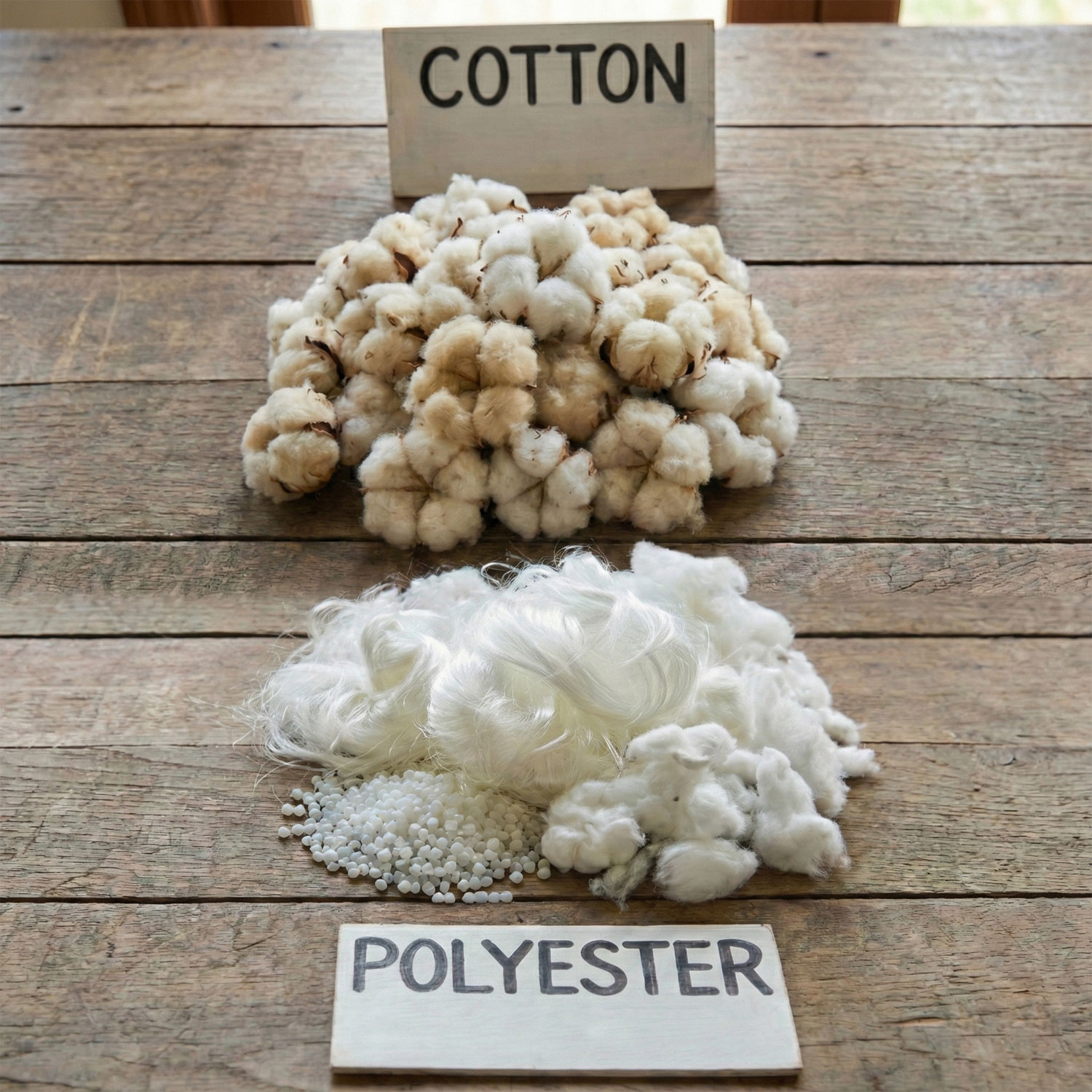
While most beginner guides list Cotton, Nylon (Polyester), and Leather as interchangeable choices based on “personal preference,” there is a massive physiological and mechanical difference in how they handle friction. When heavy loads meet human sweat, the wrong material choice doesn’t just ruin a set; it becomes a safety hazard.
1. The “Hydrophobic” Trap: Why Polyester Dominates the Market (But Fails the Lifter)
If you walk into a big-box sporting goods store, 90% of the straps you see are made from polyester or nylon blends. Why? Because they are incredibly cheap to manufacture, easy to dye in neon colors, and virtually indestructible.
However, synthetic fibers like polyester are hydrophobic. In plain English: they hate water.
This sounds like a benefit until you realize that your palms are one of the most sweat-prone areas of your body. During a high-intensity session, your body temperature rises, and your sweat glands go into overdrive. Since polyester cannot absorb that moisture, the sweat has nowhere to go. It sits on the surface of the strap, creating a thin, microscopic “lubricant” layer between the strap and the barbell.
This is the “Silky Slide” effect. Right when you reach the 8th or 10th rep—the moment where mechanical tension is highest and muscle growth actually happens—the synthetic strap loses its “bite.” You end up fighting the equipment instead of the weight. For a serious lifter, using polyester is like trying to drive a sports car on ice with summer tires.
2. Why 100% Cotton is the “Grip King”
Cotton is a natural, porous fiber. Unlike its synthetic counterparts, it is highly absorbent. This isn’t just a comfort feature; it’s a critical performance factor.
When you sweat, cotton pulls that moisture away from the surface and into the core of the fiber. This keeps the interface between the strap and the bar dry. In physics, this maintains a consistent coefficient of friction.
When you wrap a 100% cotton strap around a barbell, the fibers expand slightly as they take on moisture, actually “locking” more effectively into the knurling (the rough texture) of the bar. You aren’t just holding a piece of processed plastic; you’re using a material that works with your body’s physiology. This is why “old school” powerlifters, who have seen every gimmick come and go, almost exclusively stick to heavy-duty cotton. It’s reliable when the weight gets dangerous.
3. The Mechanical Lock: Beyond the Fabric
At The Last Pull, we realized that while cotton is the best base material, we could improve the “mechanical bite” through engineering. This led to the development of our Strategic Silicon Stitching.
Think of the relationship between the strap and the bar like a winter tire on a road. The cotton handles the “weather” (the sweat and moisture), ensuring the surface isn’t slick. The silicon stitching acts like the tread or the studs on that tire. It provides a “tackiness” that doesn’t exist in nature.
This hybrid approach solves the biggest problem with traditional straps: the need for a “death-grip.” Normally, even with straps, you have to squeeze the bar hard to keep the strap from unwinding. With silicon-infused cotton, the strap does the heavy lifting. This allows you to relax your forearms slightly, which has a massive hidden benefit: Better Mind-Muscle Connection. When your forearms aren’t screaming in pain, you can actually feel your lats and hamstrings doing the work.
4. Biomechanics and Skin Health: The Cost of Friction
We need to talk about “Friction Burns.” If you’ve ever used nylon straps for high-rep Romanian Deadlifts, you know the stinging sensation around your wrists the next day.
Synthetic fibers are essentially plastic. Under heavy loads, they don’t stretch; they “bite” into the skin. Because they are non-porous, they create heat. That combination of heat and pressure leads to skin abrasions and calluses that can tear.
100% Cotton is a softer, thicker weave. It has a slight natural “give” that allows it to conform to the unique anatomy of your wrist bones. By distributing the pressure over a wider, softer surface area, you eliminate the “cutting” sensation. If you’re training for longevity, saving your skin integrity is just as important as saving your joints.
5. The “Cheating” Myth: Using Tools Wisely
There’s always someone in the gym comments section saying, “Straps are cheating, just build your grip strength.”
This is a fundamental misunderstanding of biological bottlenecks. Your back, glutes, and hamstrings are massive muscle groups capable of moving hundreds of pounds. Your forearm flexors are tiny in comparison. If you only deadlift what your grip can handle, your legs will never be fully challenged.
The goal of using a 100% cotton strap isn’t to replace grip strength; it’s to remove the bottleneck. You should still do your warm-ups without straps to build your raw grip, but when it’s time for the “work sets”—the ones that actually trigger hypertrophy—you shouldn’t let a sweaty palm be the reason your progress stalls.
6. Maintenance and Longevity: A Practical Guide
Another reason people drift toward polyester is the belief that it’s more durable. While it’s true that plastic doesn’t biodegrade, a high-quality, heavy-duty cotton strap is built to last years.
The beauty of cotton is that it’s washable. After a month of soaking up sweat, a polyester strap will begin to smell like a locker room—and you can’t really get that smell out of plastic fibers. Cotton straps can be tossed in a mesh bag and washed, coming out fresh and ready for the next cycle.
The Final Verdict: Real-World Performance
If you train in a temperature-controlled, professional studio and never break a sweat, you might get away with using cheap polyester straps. But for those of us in the real world—the garage gyms, the crowded commercial basements, and the high-intensity powerlifting pits—the choice is binary.
-
Polyester/Nylon: Hydrophobic (sweat stays on the surface), causes slipping, creates friction burns, and feels like “plastic” against the bar.
-
100% Cotton (The Last Pull): Hydrophilic (absorbs sweat), maintains a high coefficient of friction, saves your skin, and uses silicon technology to lock the weight in place.
Stop fighting your equipment. If you want to see what your posterior chain is truly capable of, you need a material that stays out of the way and let’s you pull.
It’s time to switch to the “Grip King.” It’s time for 100% Cotton.

